TITLE:
Art Activism, Art theory or just plain Art
ABSTRACT:
"Is that Art?" "What are you doing in Home Depot?" "I just don’t understand, so I can’t form an opinion?" "The radio seems to roll in and out of the station, why?" These are a few of the questions I have been asked about my project on Precocious Puberty. Technology, theory, activism, art, intent, content, public and private, the overlapping of interdisciplinary practices causes problems that inhibit understanding and flow of communication.
Version 4 5_30_07 : Last night I had my final Art Critique. I walked and projected my Precocious Puberty Art video and sound around the University of California, Irvine campus, performing my Portable Projections on foot paths, trailers, medical and research buildings, the library and in Starbucks. It was meant to be a site specific Art presentation. Version 1 December 2006: I presented a long Precocious Puberty video in a Women's Studies class for a grade. A DVD screened on a mobile Television. My video was my paper, (but I also had to write a research paper for the final grade.) Version 2 May 2007: I demonstrated a re-edited version of my Precocious Puberty video with the sound transmitted by radio plugged in at the wall. It was shown on a computer to visiting artist, Sharon Hayes and other workshop participants as an ‘Artwork’ in progress, non site specific. Version 3 5_07_07 through 5_30_07: With backpack, projector, DVD player, radio transmitter and radios I have been projecting and testing the Precocious Puberty project in public spaces. I walked around Long Beach and in Orange County projecting and transmitting on streets, and billboards, in Malls, hospitals and in warehouse stores, on fast food joints, oil rigs and all free walls. Joshua Kinberg, at right in a video image, devised a bicycle that could spray the ground with messages in chalk, and was arrested during the convention. His device was held for over a year.
 "AIDS Art Activism Women 1980s
  Guerrilla girls
"What is that, Art?" "What is Activism?" "What happens if the viewer doesn't get what you are trying to say?" These are the obvious questions that I am asked when I critiqued about my project. Can Art be placed into the public sphere, be conceptually driven, but not necessarily propaganda dominant? Can we just allow the spectator to interpret on their own, crossing into the artists space only if they choose? Can the Spectator, scholar, and Artist allow each other to be in the same space, and not all be satisfied? These are the questions I am asking when I perform with the Precocious Puberty Projections.
My blog, as an alternate text, it is my academic paper, and this notion of crossing the boundaries set up by the principles and criteria of the written paper raises the same type of questions that my Art project Precocious Puberty Projections does when placed in alternate venues. We as viewers and participants, have preconceived ideas about art, art activism, art and technology and emergent practices, performance, public art and the public sphere and all these ideas that have been created over time create a favoritism in the way we interpret different situations or our academic production of knowledge. I am 'narrow casting' my public demonstrations of my project into already narrow defined spaces, in an attempt to provoke a dialog into the way we bias the productions of knowledge at university.
INTRODUCTION:
As I walk my way through the conceptual minefield of understanding the finer qualities of knowledge and Art, the first problem that I encounter, is the fact that we are mostly, already entrenched in our ideas about Art and Activism. This creates a seamless, even unconscious, predilection towards whether we will, or even if we are prepared to notice, Art in the Public Sphere. Take for example the inherent difference between Richard Longs, work where he walks contemplatively through a desert leaving his a line of footprint as art in the public or the Graffiti artist marking the subway wall, the issues of legality, the situatedness and the actions override the aesthetics and content of the work Calder
  stencil art
  Richard Long
Krzysztof Wodiczko
It is generally thought that Art is ‘enriching’ 1. Art improves the quality of our lives, promotes a cultured, democratic, educated society. Mention activism or propaganda, then Art becomes a radical way of interpreting oppositional ideas and tends towards marginalization. Can my Art walk this divide, being both activist and artistic? By showing my project under the 4 different situations, outlined above, I became acutely aware of the problematics of interdisciplinary practice, and the boundaries created by different languages, visual and written, personal and cultural, not only in the Arts or Academia but between the Public and Private. What is it to claim to do Activist Art? Do I have to claim to be pushing an agenda or can I wait until the public interacts with me as I have intended? If they don’t want to interact with me, then they are left to create own interpretations.The fact that the spectator has a choice in participating at different levels, creates a place where they might not understand or even misrepresent my intentions. So this continuous action of re situating an interactive performance in different places is loaded with intent and clogged with preconceived ideas, ideas that are like the "elephant in the small room" - seen but not discussed By allowing the viewer to participate or not just doing Art for Arts Sake, I am staging a place for discourse.

As I walk, I am engaging the public, by simply projecting the video in a public space. But people need to engage me, to fully understand the videos content. So what is my intent? My intent is mixed. I am totally aware of the content that drives my process and inspires the project, historically and technically. But, I am also OK with the fact, that if you do not want to know my activist agenda, you can simply walk away with your own ideas about the project. This practice of “sitting on the fence”, allowing for a mere superficial reading, challenges the Academics of Art in universities (Brecht) where the post postmodern Art critique relies on a specific hierarchy; idea, context, materiality and then the aesthetics when making the art. I want both, people to just look and others to engage. Marcel Duchamp, Bicycle Wheel,
Precocious Puberty Projections is not just "Art for Arts Sake". It is not a Dadaist tactic, where the everyday object is raised to the position of High Art, by being placed in the gallery space. Precocious Puberty is an educated decision, where I am placing my conceptually relevant Art, into the public sphere for consumption. If the passerby wants to engage in it themselves, beyond the quick superficial glance, then they can use a radio, ask questions or simply make shadow puppets. Precocious Puberty is also a practice in Intervention Art where I am simply putting High Art into an unconventional space, doing an anti-Duchamp.
BIBLIOGRAPHY:
1. Art or propaganda Dewey + Adomo
Almost all people - even if they seldom articulate or act on this belief – believe that art is good in an ‘enriching’ type of way, making us better people and promoting a healthy and free society. Conversely, most people believe that propaganda is bad because it our experience, reducing our society to one – dimensionality and reducing our freedom. Art enriches – propaganda improvises – we have to assume that the different between politics and art is discernible easily visible
Thursday, May 31, 2007


Wednesday, May 30, 2007
TITLE: Art is process. Art is language. Art is knowledge.

STATEMENT:
My process of Art production, is evidence of the production of knowledge. Today, I spent my time editing a Quick time video, as documentation about my performance last night, that I will post on My Space http://www.myspace.com/fatsothedidileo. This documentation will be proof that I have achieved an “emerging path, that combines Technical and Scientific disciplines with Arts and Humanities.” (ACE) I have to show evidence that my project, Precocious Puberty, Guerrilla Projections works as an ACE, MFA Graduate requirement, outlined on the ACE Curriculum web page . The Internet, that was started as a way to exchange information among universities and government organisations, (ARPANET ) can now provide a space for proof of project and a working knowledge of technology. This connection between my art project, documentation and the history of the Internet, is an introduction to the process of validation for my academic proficiency in the space of knowledge production and emerging practices.
These series of Quick time videos posted on various public Internet sites (Youtube, current TV, Myspace) and my web site (http://www.awillcocks.com.PPP.html) is part of the evidence necessary in proving that I “understand the technical, historical and socio-cultural locations in my work.” (ACE) My project is Portable Projections, Precocious Puberty.
INTRODUCTION:
Let us assume that the practice of the making the artifact, for use, communication and desire is a cultural practice that has been around since prehistoric times. (1) From the cave painting in Lascaux, France, the contemporary paintings of Australian Aboriginal Women to the Nazca Lines in Peru, theories around the uses and relevance of art, and its importance as evidence of Culture have emerged, particularly in the 20th century, where the artist now see themselves as Culture Makers.
 Lascaux cave
  aboriginal painting
  Nazca lines
Art has many uses and can be seen as a reflexive technology,(Ashmore) upon which the artifact becomes evidence of linkages to the past. a cultural connection. Examples of the artifact as culture and evidence of the production of knowledge, range form: Inuit tools used for hunting, but now being displayed in Natural History Museums across America; Leonardo da Vinci's scientific sketches made during the Renaissance were simply drawings of the imagination but are now often thought of as radical possibilities in the world of scientific inventions. They are now displayed in Science museums; The romantic paintings of artist William Turner (Art Museums) or naturalist drawings by John James Audubon (books) today provide evidences of lost species and landscapes. They are indications of the way the world once was, connecting the ideas of the past with the the documentation of nature today a natural history; Also Pablo Picasso and Diego Rivera painted murals that adorned buildings in the 1920's and 1940's, they were a direct response to the socio-political events of the time. (Guernica and Man at the Crossroads, Rockefeller Center in New York City), they are a political history as well as a painting. Inuit
Inuit  Da Vinci
  Turner
  Audubon
  Picasso, Guernica 1937
 Rivera, man at the crossroads 1933
Artists have often been on the edge of contemporary practices, take for example Joseph Beuys, a German whose career revolved around expanding and opening up a dialog on the concept of Art, communicating through a series of ‘actions’ and public discussions. He was an artist who projected his work and ideas well beyond the sphere of ascetics and the boundaries of museums and art academics. He argued instead that all areas of human activity, whether social, political, economic. or spiritual, fall within the parameters of artistic activity. Art and the creativity within all humans was presented by Beuys as the agency, ‘the power to achieve and transform’ (2)
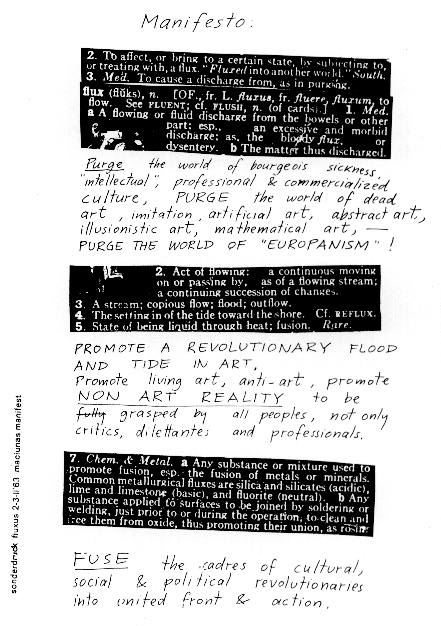 Fluxus
  Robert Smithson
 Kenneth Knowlton
Up until the 50’s in America, Art in America was traditionally about the practice of Fine Arts that is drawing, painting and sculpting as skills – the atelier system. A conceptual shift in Art appeared after WW2, parallel with the invention of digital technologies (Turing) and the striving for a new American identity. (Fluxus, Art as Process, computer art). The resulting shift in Art production meant that by the 60's and 70’s art and its practices had changed and theory was raised above the practice of making resulting in the discorporate, the conceptual and the idea becoming the essential. (Robert Hughes). This reaction to changes in science and society, the moving away form the aesthetic is shown by John Baldessari who produced a series of paintings from text-book sources where he began to use language not as visual material but as actual information, or Mary Kelly whose early politicized art works such as Women and Work: Documentation on the Division of Labor in Industry (1975) employed conceptualized and process-based strategies intensifying her complex installations. John Baldessari
  Mary Kelly
As we turn into another century the blurring of media, technology, design, art, spectator, participator, theory and practice becomes a large part of the Artistic dialog. Barbara Kruger’s text and graphic imagery forces the spectator to imagine a response to her mediated messages, which were placed on billboards, bus cards, posters, media shelters etc. (site examples) Kruger’s pieces are about the spectators temporary interpretation at a particular transitory moment. The spectator completes the narrative, and as she states “ I am trying to interrupt the stunned silences of the image with the uncouth impertinences and uncool embarrassments of language’ Barbara Kruger creates an imagined knowledge that the spectator completes with or without consciousness (Lacan) Hasan Elahi documents his life in fear of being deported from America after 9/11 - a knowledge of surveillance. My art is not only about the disease of Precocious Puberty, but it is about placing Art in the public sphere, about involving the community in the process of Art, it is an academic production of theory and Knowledge through Performance and Practice? Knowledge is being created through technology, action and social relations and these cannot be separated. (Marshal McLuhan)


| To: | pumpkin@mindspring.com | ||
| Subject: | thoughts on precocious puberty project | ||
| Date: | Jun 6, 2007 12:17 PM | ||
When Angela asked me if she could film the kids for her thesis, I was eager to help and was interested in what she was doing. My kids were excited to be filmed and had no idea what the subject was. Angela did not give me many details of her project until the day she came to my house to film. She showed up with a bag of organic apples. When she began explaining what precocious puberty was I was taken back because I had dealt with this issue with my daughter when she was five years old. I had never heard the term “precocious puberty”. The doctor had only told us it was early onset of puberty, probably due to genetics and/or hormones in foods. I was very curious about this project. We discussed the descriptive language the medical profession uses and how the term precocious puberty put the onus onto the child.
hope all is well. Call me Lisa


 Barbara Kruger
By situating my Art as the Process of Art, the Process of Documentation, the Process of community involvement and using the blog as my Paper, I am creating a conceptually relevant document that fulfills the Universities criteria for evidence of the Production of Knowledge and understanding of scholarship. Through my use of New Media and technology, I am creating interactive narratives as Art, that rely on the personification of language, generated with and through technology and social interactions. (hyperlinking) The spectator and reader are the participator. http://www.awillcocks.com/PP.html The multiple placements, the multiple viewings, the multiple experiences created from multiple projections, connections and placements, with radio transmissions, videoing, acting, performing, talking and walking I am creating a new knowledge around the Precocious Puberty child and the use of Art in the public sphere.
This alternate exploration of Art, theory, language, and resistance can “emerge(s) in non-canonical cultural forms-transforms our critical strategies. It forces us to confront the concept outside objects d’art or beyond the canonization of the ‘idea’ of aesthetics, to engage with culture as an uneven, incomplete production of meaning and value, often composed of incommensurable demands and practices, produced in the act of social survival” (3)
So how do I prove my project works conceptually and artistically. I sent out a public announcement through internet, mail and telephone inviting participation and observations. Not one from my Acedemic advisers came, but that was not the the point, they can now see 'proof of project' on the internet at Myspace, Youtube, Current TV and on my web site? My contention, that by becoming a part of everyday practices (de Certeau,) I can actively take Art into the public sphere. I walked a direct route with backpack, projector and radio transmitter in Long Beach, CA. through Home Depot, along streets, past pumping oil-rigs, to an emergency medical center for kids. Just me, and my support person, Pearl who documented the experience with video. The people it affected the most were those who just happened to be where I was projecting. The everyday person was my target audience not the ones invited from Art and Academia but those who do not normally come into contact with alternate forms of expression. This was the evidence I needed, the evidence that I was finally creating a space for everyone and anyone.


As I complete this project what became apparent was the difficulty of shifting between disciplines and social places. I was starting to move between the worlds of Art and technology, Artifact and Activism, theory and Practice, without compromise. My art practices is about the technology, the Artist, the public, private, the interpreted symbol, the truth, the aesthetic and the content, the evidence of knowledge production and the artistic experience. They all have power, which produces a texualization of language, always overlapping the other. This inherent problem in presenting this project as scholarship is the obvious intellectual disregard of the practice and process of Art as knowledge production. This already existing phenomena created socially is indicative of the inherent problems in cross disciplinary practices - the defense and superiority of particular techniques and processes that are entrenched in a disciplines practice limits communication presenting initial obvious problems with ‘the written paper.’ Opportunistically I am proposing that by challenging and adopting alternate practices there is a “production of knowledge”.
NOTES
Capitalization:I use the Capital letter of A in Art or K as in Knowledge to give a sense of legitimacy and authority the the words placing the word above others in context and content!
Hyperlink: Hyperlinking is the action of clicking on an object that virtually links information and ideas. It can be a navagation tool a data network as well as a concept or narrative.
ACE - Arts Computation and Engineering University of California, Irvine. Program overview
http://www.ace.uci.edu/
1. Kuber, George The Shape of TIme: remarks of the History of things Yale University Press 1962
25. Title: The postcolonial and the past modern- the location of culture Mladen Dolar p172. Author: Homi Bhabha, Publisher & Date: Routledge 1994 22 - 23. Title: Joseph Beuys The revolution in us Tate Gallery Liverpool Compiled and edited: Judith Nesbit Publisher & Date: Cox Rockliff, Liverpool. 1994
Ashmore, Malcom The Reflexive Thesis: Wrighting Sociology of Scientific Knowledge. With a Foreword by Steve Woolgar. 318 p. 1989 University of Chicago Press
2 Title: Joseph Beuys The revolution in us Tate Gallery Liverpool Compiled and edited: Judith Nesbit
Publisher & Date: Cox Rockliff, Liverpool. 1994
McLuhan, Marshall. Understanding Media: The Extensions of Man (Cambridge: The MIT Press, 1994),
3. Bhabha, Homi The postcolonial and the past modern- the location of culture Mladen Dolar p172.
Routledge 1994
de Certeau, Michel translated by Steven F. Rendall. 1984. The Practice of everyday life.,
University of California Press, pp34-35
Tuesday, May 29, 2007
TITLE:
Knowledge production; an institutionalized practice or a practice in resistance of Art
ABSTRACT
By situating my thesis as an extension of today’s historical, theoretical and technological contexts, I can validate the scholarship of my interdisciplinary Art practice. Art as process, Art as culture making and Art as an essential, critical practice in the production of knowledge. My paper will be a formatted as an electronic hyper linked blog. http://errgomeego.blogspot.com/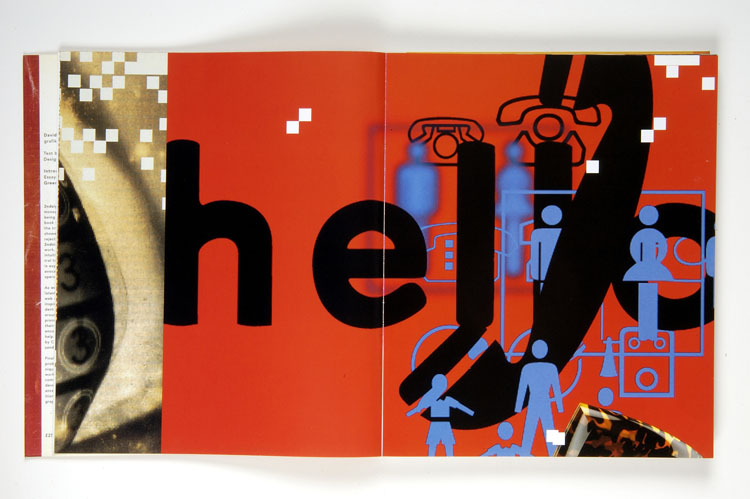 art
art 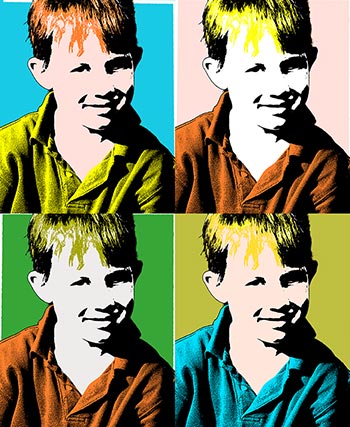
Why challenge university procedure and produce an alternately formatted thesis?
What relevance is it to my practice of Art and my "production of knowledge" as an interdisciplinary practice? I started today by scrambling through my suggested readings for the Spring, 2007 semester and past two years, eventually deciding that Malcolm Ashmore's "The Reflexive Thesis" was the necessary evidence, offering an historical context and published,(through which press?) which qualifies the book as containing knowledge, the intellectual substance, which is a compulsory requirement in justifying my argument for format changes to the ACE Thesis, as an Master of Fine Arts student.
The Production of Knowledge is historically based on the gaining and producing of information. Information that is ‘situated’ (Latour) in a discipline and its practices, and is concreted, (immortalized) by the formatted written document (paper) and its many uses. The writing of the ‘Paper’ is a document that over time has become a self-validating intellectual practice, perceived as subjective, yet elitist in language and function. (Gibbons). Today the academic paper, seems to work both as a metaphor for the Institutionalization of the University System in the West, where the practice of knowledge production is a type of apprentices document and as a way to canonize and solidify the hierarchical nature of knowledge production, education and information recycling, whilst not reflecting the actual way research is carried out . (samples: science authorship and syllabus). conditional patterns and issues
The practice of paper writing within the University system, has evolved into an intellectual practice, most disciplines use. (Science, Law, Humanities, Informatics) On one hand, the paper is a way to gauge whether a student or professor has developed critical skills in a specific area, but on the other hand it facilitates the flow of the control of research, organizes and directs the development of technology, manages the making of culture and the systems of the capital market.( Bourdieu 1988) (Biagologi &Galison) (Haraway) So why bother challenging a University System steeped in tradition and bureaucracy when it will not further my personal status as an artist or student intellectual?

 guttenburg bible
  rhythm science
The history of the institutionally produced written document, goes back, past the invention of the printing press and the illuminated manuscript, where it was used to influence entire populations. Little has changed with the use and perceived impact of the written document, but lots has changed in the techniques and applications of knowledge research and creation. The use of the written document (paper) is an interpretative practice, where knowledge and its use in education is a 'situated ' production, a nexus of the intellectual market (Latour) and an extension of the power within the technology of information (Foucault) For example the more papers you write, the more information you produce, the more knowledgeable you become, the more chances you have of being selected to be published and if you are published then more authenticity is attached to your work and knowledge production. (Latour). The more you are published, the more you are invited to conferences, which entails the production of more papers to be published and can lead to the publishing of a book . The more papers, books and conferences, the more prestige and that means an increase in notoriety for both the institution, the person and department producing the knowledge. An increase in pre-eminence, then translates to money, money for research, money from grants and donations, money from corporations and money from more students attending the university. The university is a successfully producing knowledge, the paper appears to quantify and qualify the production of knowledge.
Quantifiable and qualifying knowledge production, or perhaps knowledge is as Malcolm Ashmore reflects, “ history is continually in the process of being written, unwritten, and rewritten by it’s various practitioners, commentators, and critics, all of whom tend to claim for it different origins, precursors, and lines of development as well as differing problematics, achievements, and findings.” P1 The academic paper today, is a mandatory inflexible college course requirement, although not followed exactly in each discipline, it does provide rigid evidence of a subject understanding, as well as being an historical and technical indicator of scholarship. The paper is a space for questions, and answers providing evidence of analytical practice and analysis but often this does not address the contemporary methodologies, the digital (global networking), the networked public (site local astronomer's), the publishers (publishers, professors) and the hybridization of new research practices. (e.g. Boston University guidelines). The format for paper writing is relatively universal across disciplines, from the Humanities to Computation, medicine to physics. The basic structure: a particular Font style, 12 point, double spaced, 1.5 inch margin a minimum of 4,000 words. There must be a title, abstract or statement, methodology and conclusion with annotated footnotes, bibliography and notes and can be presented in an electronic or paper form. Why is the paper format so regulated is ‘knowledge’ only about recycling, reinterpreting and reinvention in one particular way? (see Course requirements)
The fact that the same ‘paper’ format crosses many disciplines is problematic.(Biagioli & Galison) Can that one format take into consideration new types of authorship, new types of information technologies and new ways of question ( site science and technology Foucault chasms) Consider the technology of ‘Open source” which has forged ahead creating a challenging new way authorship. It was conceived as collaborative and inclusive because of its open editing process. People from all over the world build on top of, repair and recycle and invent using others peoples codes (give an example of championed individual) (Site paper Hactivism? - Another form of intellectual practice is the way Gayatri Chakravorty Spivak works claiming in her paper Megacity that she an autodidact, nonspecialist but able to write papers, on work in a cross disciplinary manor ( Megacity– (4)
The way Knowledge is defined in different practices "is a ‘socially constructed’ process of negotiation among the disciplines practitioners, commentators and critics” (5 ) Knowledge production is becoming more dynamic as technology and education merge becoming more global and product orientated while less democratic. For example the way the Military is collaborating in many facilities to improve the amputees prosthesis. (site NPR) This constant flux and tension within the alternate and structured forms of knowledge production need to address a more eclectic, inclusive processes. The processes of building, sorting and recycling of information should embrace the new technology of interdisciplinary formation and different methodological practices and collectives.
I am in an Interdisciplinary Program, my area of expertise Art. (http://www.awillcocks.com) My process of writing is reflexive of my Art making, my Art is my process of knowledge production. (http://www.awillcocks.com/PP.html) My blog attempts to address the importance of the new marginal methods in authorship. As I write I am creating a procedure that is valid in my area of specialty, Arts Computation and Engineering. My blog is about the production, examination and retaining of information, the forming and analysis of different cultural practices, through and by technology and the process of Art, I am no specialist but I am attempting to expand on the institutionalization of the knowledge production. nations art, aboriginal culture
  repository for art
Art today, is more often than not, connected to the practice of culture making, take for example the web site Art and Culture (www.artandculture.com) or simply Google the words Art and Culture, visit a library and look in an art history book or visit a museum of Natural Science. Can Art and new media challenge the culturally entrenched, bureaucraic University where the way knowledge production is rapidly challenging the format and construction of the act of paper writing? As art critic Robert Hughes states in his book “If not Critical” (I replace the word ‘Art‘ for ’Writing’) “Nature is dead, culture is all, everything is mediated to the point where nothing can be seen in its true quality, representation determines all meaning, and the only way that “so-called high WRITING” can engage with general perception is to step out of its old “elitist traditions and follow the Yellow Brick Road of the “cutting edge” that leads through Deconstruction Flats (6)) and Forest of Signs (7) Jeff Kong’s porcelain pigs (9) ....or to put in academic terms through Knowledge/Power (10) and the Onco mouse (11). William Kentridge's drawings jeff Koons porcelain pigs
Bibliography:
1. Carson, David, McLuhan, Marshall The book of probes Gingko Press (June 2007)
Ashmore, Malcolm The Reflexive Thesis: Wrighting Sociology of Scientific Knowledge. The University of Chicago Press 1989
Latour, Bruno We have never been Modern Cambridge, Mass: Harvard University Press, 1993.
Haraway, Donna Modest_Witness@Second_Millennium.FemaleMan©Meets_OncoMouse™ (1997). New York; Routledge, 1991.
Biagioli & Galiston Scientific Authorship; Credit and Intellectual Property in Science Routeledge 2003
McSherry, Corynne Un common Controversies: Legal Mediations of Gift and Market Modelas of Authorship. Chapter 9 . p225 - 250
Allen, Barry. "Power/Knowledge." Critical Essays on Michel Foucault. Ed. Karlis Racevskis. New York: G.K. Hall & CO, 1999.
Foucault, Michael - Power/Knowledge – "...in a society such as ours...there are manifold relations of power that permeate, characterize and constitute the social body, and these relations of power cannot themselves be established, consolidated nor implemented without the production, accumulation, circulation and functioning of a discourse."
purchase
Course requirements:
(MIT) MIT Bachelor of Science in Comparative Media Studies/Course CMS
(El Camino college) Teacher education program
University of Irvine - Feminist studies UCI
ARTS 270/ENGR 270/IN4MATX 270: INFO, PROPRTY, RES, SEM A (01020)
INFORMATION, PROPERTY, RESISTANCE
Biagioli Mario (Editor), Galison Peter (Author) What is a scientific author?.Scientific Authorship: Credit and Intellectual Property in Science Routledge New York 2003
4. Spivak, Gayatri Chakravorty Megacity Grey Room, Fall 2000, Vol. -, No. , Pages 8-25
"I like interdisciplinarity. I am an auto diadact" p9
5. Ashmore, Malcolm The Reflexive Thesis: Wrighting Sociology of Scientific Knowledge. The University of Chicago Press 1989 p2
Michael Gibbons, Camille Limoges, Peter Scott, Helga Nowotny, Martin Trow
The New Production of Knowledge The Dynamics of Science and Research in Contemporary Societies., Sage publications 1994
6. Jacques Derrida http://sun3.lib.uci.edu/~scctr/Wellek/jacques.html
7. Forest Of Signs
Art in the Crisis of Representation
Ann Goldstein, Mary Jane Jacob, Anne Rorimer and Howard Singerman
Foreword by Richard Koshalek
A Forest of Signs documents a major exhibition of critical art in the last decade, one that marks a change in the art world, perhaps even in the broader culture. The thread of representation ties together the work of the 30 artists included in the book, encompassing such issues as allegory, appropriation, and commodification, the role of the artist, and the functions of authorship and originality in vesting meaning in art. Much of the work is provocative, challenging the way we look at art, the way we talk about it, where we see it, and how we buy it.
9. Hughes, Robert Nothing If Not Critical: Selected Essays on Art and Artists p15.
10. Foucault a discussion on power: http://www.colostate.edu/Depts/Speech/rccs/theory54.htm
11. Haraway, Donna Modest_Witness@Second_Millennium.FemaleMan©Meets_OncoMouse™ (1997). New York; Routledge, 1991.
12.
http://www.atoa.ws/Spring2006/April.htm
April 2006 ATOA Calendar
Gallerists, curators, and critics discuss the future of postmodern art. What are visual examples of the most recent trends? What societal and technological
http://www.rhizome.org/ - connecting Art and technology the new museum of contemporary Art


Wednesday, May 23, 2007
TITLE:
Art as Scholarship: New Media Authorship
ABSTRACT:
The production and process of writing a paper is essential to the making of scholarship and the conditions for knowledge authentication and scholarship in the West.
Daily documentation and the rewriting of parts of my paper for the class Arts 270: Information, Property, Resistance, Seminar A (01020), then posting the segments on the Internet, challenges the process of ‘knowledge production’ at Universities (the writing of a paper is a course requirement to pass.) Simultaneously this process of rewriting, like Art, becomes an alternate, scholarly methodology, a method of authorship that is reflexive and constantly being modified, (the topic for writing will depend, on daily media review, what I think is relevant that day and my paper structure). This method of scholarship demonstrates, how the ‘production of knowledge’ is manufactured today, and exposes how the format of "Paper" as qualification for ‘knowledge’ needs to change becoming less exclusive, more open and inclusive (Biagoli & Galison)(Denning).
Recently the ‘production of knowledge’, as objective individual practice and authority is being challenged. Donna Haraway questions the hierarchy of scholarship in scientific research with her study of the Primate Research. Michael Foucault states that the use of authorship reinforces the right to censor, judge and punish. Post, Postmodernist Art relinquishes the authority of artifact replacing it with the theory that it is the process of ‘Art making’ that is Art – take for example Interactive Arts, where the collaborative aspect of user and maker merges into one process of production. (Jeffrey Shaw)  Jeffery Shaw Web of Life
My paper provides a space where the recycling or remaking of Knowledge as Technology (Foucault) and through Technology will influence my daily writings. My paper, my abstracts and therefore my ‘production of knowledge’ will be in a constant form of flux which is a necessary element of the papers structure. Powers such as the News on the Television or Youtube on the Internet, Articles, Papers or Books written by Academics and Conversations will be my inspiration, regulators and facilitators in my ‘production of knowledge’. 
 Book of Probes: McLuhan, Carson
The technology through which information flows, such as the electronics that was the platform for the decoding of the genome or the radio playing music in the car create, a biasing (mediation) (Bestor) that we are perhaps unaware. (Marshall McLuhan) My alternate paper, based on the idea that Art is a Practice, is an attempt to illustrate how the methods of knowledge production are mediated and problematic. To relinquish the power of authority imposed by intellectual authorship as writing, I am creating a new, valid document for professional scholarship. http://errgomeego.blogspot.com/. (Charter)
INTRODUCTION
The recycling of Technology is often seen as illegal or intellectually inferior. For example the pirating and distributing of products such as medicine, software and media infringes on commercial and artistic licenses, property and ownership and judgment of validity usually ends up in a court of law as patent infringement. (Larkin)(Phillips)
“Microsoft convicted of software piracy.” Delicious irony has geek community in raptures James Middleton, vnunet.com 09 May 2002
“Millions turn to net for pirate TV” By Jane Wakefield Technology reporter, BBC News
“Music retailer is fined for pirating” By Thomas Crampton International Herald Tribune
Published: June 28, 2006
"Downloading tv episodes from tvfreeload.com couldn't be easier!"
Art historians and theorist who discuss post, postmodernist Art of the 21st Century discuss the fact that ‘true’ Art today is about the process of ‘making,’ rather than the actual Artifact. Take for example Andrea Zittel who presented the work A-Z Breeding Unit for Averaging Eight Breed, she had been breeding the Bantam Bird – a perfect pet in her studio for several years and displayed them and the bird cages as art.  A-Z breeding Andrea Zittel
Art, like recycled Technologies (e.g. Linux) sits in the margins of the technological and intellectual worlds. In the margins there is space for the reshaping and creating new ways to inform, invent and interpret without judgment. (Spivak) (Larkin) By looking to the margins of intellectual authorship such as blogs or wiki and engaging in their recent practices of New Media authorship, I am proposing that through art and New Media scholarship I can challenge the notion of academic paper. watching Hausa video
Everyday methods of authorship, such as who created a piece of software that decodes a DVD blocking device (Phillips), are challenging who is given access to information and how the information is transferred. But our access to information is constantly mediated (filtered) by the apparatuses that transfer the information and this influences our decision making, what is fact or fiction? For example the colors chosen for the different parts of the brain in a visual interpretation of an MRI, or News the from Global headlines.
“Palestinian Rivals Meet to Discuss Cease-Fire”
By STEVEN ERLANGER 11:52 AM ET
The president, from Fatah, and prime minister, from Hamas, also sought ways to quell the fighting with Israel.
“Reporters Without Borders Condemn Israeli Attack on TV Stations in Nablus “ Time:12:23
PARIS, May 23, 2007, (WAFA) - Reporters Without Borders condemned Israeli army raids on five Palestinian radio and TV stations in the West  Brain images of an MRI
How can we disseminate the truth? Why is the truth of an academic paper more valid than the everyday production of knowledge? Making well informed academic decisions, and responses becomes difficult when the information is mediated both overtly, like the News on TV or as ubiquitously as the embedded system of scholarship in the University system?
By engaging the Art form of writing as Process there is a place where the recycling of technologies and information acknowledges and reuses the problematics inherent in knowledge production. You can open up a space where engagement of the concepts of "Art as Process' becomes 'Art as Scholarship' - a viable form of new media authorship.
NOTES:
Mediate for me means not only the transferring of information through an apparatus but also the fact that the actual mode of transference is already conveys a message e.g. a TV monitor that isn't being played makes a statement. It is already contextualised by the participators past and present experiences and therefore prejudices our decisions.
Recycle - to use again
BIBLIOGRAPHY:
Bestor. Theodore. Supply-Side Sushi: Commodity, Market, and the Global City American Anthropological Association 103(l):76-95. 2001,
Mediated meaning through which we are to interpret our environment then language is the like ‘labor’
which can be divided in to “specialized realms that are integrated or coupled in multiply contingent ways,
rather than any flat executive flat or managerial omnipresence” (p80)
Biagoli & Galison. Scientific Authorship, Routledge 2003
Denning, Dorothy E. Activism, Hacktivism, and Cyberterrorism: The Internet as a Tool for Influencing Foreign Policy, Georgetown University
Haraway, Donna J. Primate Visions: Gender, Race, and Nature in the World of Modern Science. Routledge. New York and London, September 1990, Paperback, ISBN: 0415902940.
Foucault, Michel. “Qu’est-ce qu’un auteur’ 1969
‘What is an author Language , Counter-memory, practice selected essays and Interviews” wd. Donald F. Bouchard Ithaca and London: Cornell University Press 1977
Charter, Roger Foucaults Chaismus. Authorship between Science and Literature in the Seventeenth An eighteenth Centuries
p15 “Foucault invites us to a retrospective investigation focusing on the function of the author within different discursive practices with the history of the conditions for production, dissemintation, and appropriation of these discursive formations”
McLuhan, Marshal. Understanding Media: The Extensions of Man .
McGraw-Hill
Critical edition published by Gingko Press in 2003
Shaw, Jeffery. Network installation with Michael Gleich, Lawrence Wallen, Bernd Lintermann and Torsten Belschner
The audio-visual environment “Web of Life” is formed by an immersive conjunction of projected three-dimensional computer graphic and video images, together with a fully spatialized acoustic experience and a specially conceived architectural surrounding. The visitor interactively influences the performance of the audio-visual environment by imparting to it the unique patterns of his individual hand lines, thus giving symbolic and experiential expression to the action of connecting oneself to an emergent network of relations.
Braudel, Fernand. Every age constructs its own type of war”. p378 / Sarai Reader 2004: Crisis/Media
Information = Politics / 379 War in the Age of Pirate Reproduction N I T I N G O V I L
Larkin, Brian. Degraded Images, Distorted Sounds: Nigerian Video and the Infrastructure of Piracy
Phillips, Kavita. What is a technological author? The pirate function and intellectual property. Postcolonial Studies, Vol. 8, No. 2, pp. 199–218, 2005
“Microsoft convicted of software piracy”
Delicious irony has geek community in raptures James Middleton, vnunet.com 09 May 2002
Microsoft was found guilty of software piracy last year by a French court, according to facts unearthed today by the geek community.
But the Redmond giant's conviction and three million franc (£285,000) fine somehow managed to escape the headlines. In fact, until today the only place the story has appeared is in French newspaper Le Monde Informatique.
And the only person who noticed the irony of the world's most aggressive anti-piracy firm being fined for piracy was Peruvian congressman Edgar David Villanueva Nunez.
Nunez inadvertently became a hero of the open source movement last month when he penned a letter to Juan Alberto Gonzalez, general manager of Microsoft Peru, arguing that the free software model does not break any intellectual property laws.
“Millions turn to net for pirate TV”
By Jane Wakefield Technology reporter, BBC News
If you are a fan of TV drama Lost but are not able to watch it on US TV, it is not hard to find episodes on the internet.
Popular shows like Lost, Desperate Housewives and 24 are increasingly easy to find for free on peer-to-peer networks, often within minutes of airing in the US.
And many people outside the US are simply not prepared to wait until they come to their own small screens.
"Most episodes come online about half an hour after it first airs in the US," says Dr David Price, head of piracy intelligence at web monitoring firm Envisional.
"Someone with a fast connection in the UK can watch it before it airs on the west coast of the US."
“Microsoft steps up piracy fight”
Around a third of software sold worldwide is counterfeit
Microsoft has stepped up its fight against software piracy by requiring users to verify their copies of the Windows operating system.Anyone downloading updates for Windows XP will be required to check that their operating system is genuine. Security updates are exempt from this in order to prevent people spreading viruses across the internet.
A third of software worldwide is fake, according to industry group, the Business Software Alliance.
Losing billions Microsoft said that more than a third of its software is counterfeit, which it says costs it billions of dollars of lost income. With Windows accounting for 90% of operating systems sold worldwide, cracking down on the pirates is one of the few ways for Microsoft to expand its business.
“Music retailer is fined for pirating”
By Thomas Crampton International Herald Tribune Published: June 28, 2006
PARIS In a rare case of a music retailer turned Internet pirate, the Virgin chain in France said it had been found guilty of downloading and reselling a Madonna hit without permission.
The store's online portal was ordered by the Paris Tribunal of Commerce to pay €600,000, or $754,000, in damages for downloading the Madonna song "Hung Up" from a France Télécom Web site.
The Web site had exclusive rights to distribute the song for one week.
Andrea Zittel is a cross between an artist, a designer, and a social scientist. “I was working with animals and breeding them. But part of that was making these structures, these breeding units for them that they would live in. I had sort of developed a particular aesthetic and technology for building these with these welded steel structures, and then these wooden inserts that were pretty flexible. So, for instance, a breeding unit not only would influence the way that the animal would develop, but also it would have everything built into it that the animal would need for living.
So, after doing this work and living in this tiny space for a while, I think that it started to make perfect sense to try to create structures like that for myself to live in. “
Zittel does research as art. How influenced are our decisions by the local as well as the global? Does this practice highlight the claim that both technology, and social relations influence the symbolic and material production of science and the scientific practice?
3. http://www.pbs.org/art21/artists/zittel/clip1.html
http://www.zittel.org/
Larkin, Brian. Degraded Images, Distorted Sounds: Nigerian Video and the
Infrastructure of Piracy
“It is through this generative quality that pirate infrastructure is expressive of a
paradigmatic shift in Nigerian economy and capital and represents the extension
of a logic of privatization into everyday life. Piracy’s negative characteristics are
often commented on: its criminality, the erosion of property rights it entails, and
its function as a pathology of information processing, parasitically derivative of
legal media flows (Chesterman and Lipman 1988; Coombe 1998).” p290
“Rather than elide pirate infrastructure by using it as a window into legal ques-
tions of intellectual property, I wish to foreground it. If infrastructures represent
attempts to order, regulate, and rationalize society, then breakdowns in their operation, or the rise of provisional and informal infrastructures, highlight the failure of that ordering and the recoding that takes its place. By subjecting the material operation of piracy and its social consequences to scrutiny, it becomes clear that pirate infrastructure is a powerful mediating force that produces new modes of organizing sensory perception, time, space, and economic networks.” p291
Hausa movie youtube
Old Northern Hausa Praise Singing by Taguimba
http://www.youtube.com/watch?v=ybNu62rbRQU
Hausa Movie Song 419
http://www.youtube.com/watch?v=gtugZs-JXjU&mode=related&search=
Phillip, Kavita. What is a technological author? The pirate function and intellectual property, Postcolonial Studies, Vol. 8, No. 2, pp. 199–218, 2005
Angela Willcocks
For Kavita Philip
Arts 270: Information, Property, Resistance, Seminar A (01020),


